How to Identify a High Quality Super Clone Watch 7 Details That Matter

Updated: 5 days ago
A heavy watch can still be poorly made. Weight may create a good first impression, but it does not prove accuracy, finishing, movement quality, or long-term durability.
When evaluating high quality super clone watches, look at the details that are hard to fake well: case proportions, dial alignment, bracelet feel, movement construction, crystal clarity, surface finishing, and final inspection. These are the areas where strong manufacturing shows.
This guide focuses on practical inspection points buyers can use before purchasing super clone watches, whether comparing Rolex replica watches, high quality replica watches, or custom builds from a replica watch factory.
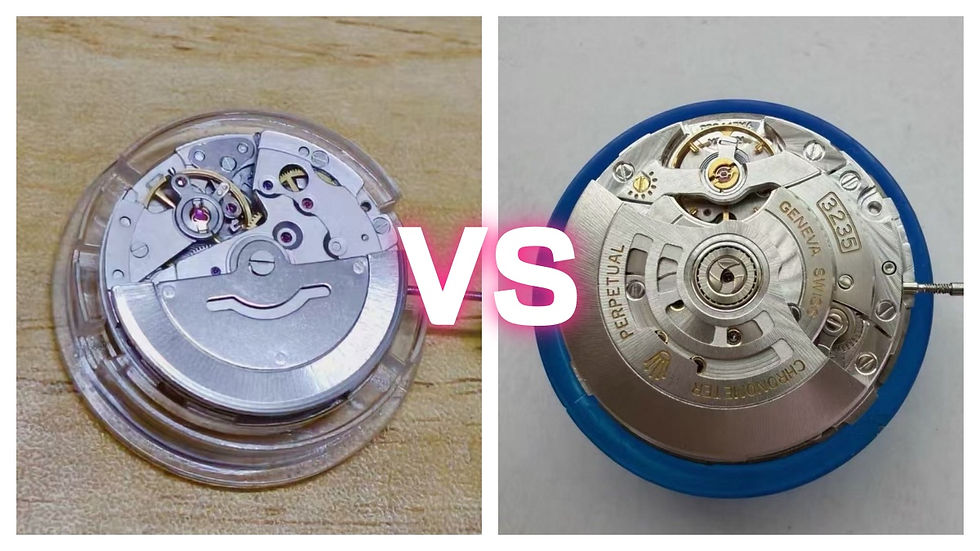
Why Weight Alone Does Not Define High Quality Super Clone Watches
Many buyers pick up a watch and judge it by how solid it feels. That makes sense, because cheap replica watches often feel light, hollow, or loose. But weight alone can be misleading.
A watch can feel heavy because of a thick case, dense bracelet, or oversized components. That does not mean the proportions are correct. It does not mean the dial is printed cleanly. It does not tell you whether the movement is well regulated or whether the clasp will hold up after daily use.
A better inspection looks at the full watch as a system. The case, dial, bracelet, movement, crystal, plating, and assembly all need to work together. If one area is weak, the watch will show it over time.
1. Check Case Dimensions and Proportions
The case is the foundation of the watch. If the shape is wrong, even excellent dial printing or a good bracelet cannot fully save the piece.
Look beyond the listed case size
A factory may list a case as 40 mm or 36 mm, but the official diameter is only one part of the profile. You should also check:
Lug length and lug shape
Case thickness
Bezel height
Crown guard shape
Caseback profile
Distance between lugs
How the watch sits on the wrist
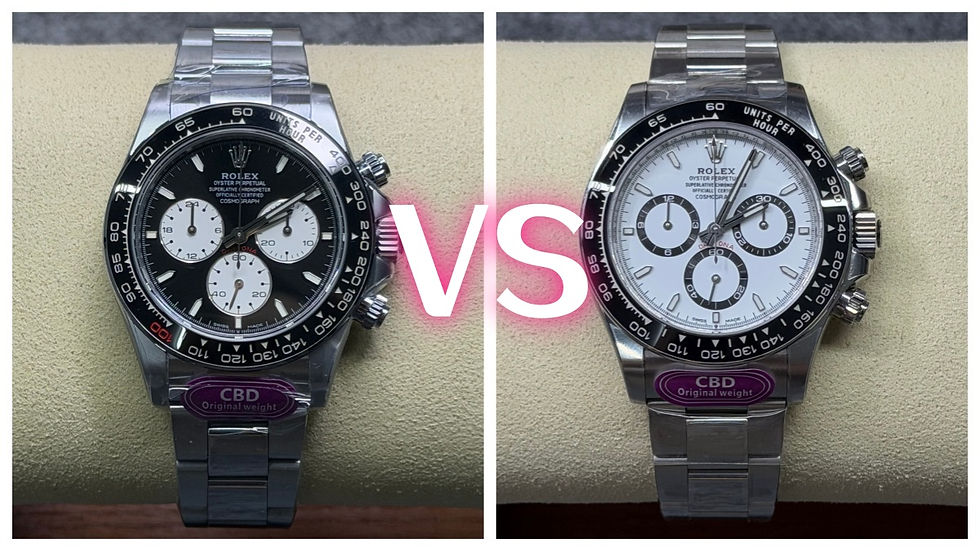
A Daytona-style chronograph, for example, depends heavily on case balance. If the lugs are too thick, the bezel too tall, or the mid-case too bulky, the watch can look slightly off even if the dial is attractive.
Day-Date-style watches also rely on proportion. The case, fluted bezel, bracelet end links, and dial opening need to look balanced. A case that is too thick can make the watch feel less refined.
Inspect the side profile
View the watch from the side. A high-quality case should have clean transitions between polished and brushed surfaces. The bezel should sit evenly. The caseback should not look overly rounded or crude.
Also check the crown. It should screw down smoothly, sit straight, and feel secure. A crown that feels gritty or wobbly is often a warning sign.
2. Inspect Dial Printing, Markers, and Alignment
The dial is one of the easiest places to spot poor manufacturing. It is also one of the hardest areas to perfect.
Check printing under bright light
Use a loupe or phone macro lens if possible. Inspect text, minute tracks, subdials, and logo-style printing. Good dial printing should be sharp, even, and properly centered.
Look for:
Fuzzy text edges
Uneven ink thickness
Crooked minute markers
Misaligned subdial rings
Off-center date windows
Dust or fibers under the crystal
On chronograph layouts, such as Daytona-inspired designs, subdial spacing and printing quality matter a lot. Even slight misalignment can make the dial look careless.
Look at applied markers and hands
Hour markers should sit flat and line up with the minute track. Hands should be clean, polished evenly, and free from rough edges.
Check the hand stack from the side. The hands should not touch each other or scrape the dial. When setting the time, the hands should move smoothly without jumping or slipping.
Lume application should also be even. It does not need to be excessively bright to be well made, but it should look clean, consistent, and properly placed.
3. Evaluate Bracelet and Clasp Finishing
A bracelet can change the entire feel of a watch. Even if the case and dial look good, a poor bracelet makes the watch feel cheap.
Test the bracelet feel
A good bracelet should feel smooth, solid, and controlled. The links should move freely without rattling too much. Sharp edges are a bad sign, especially near the clasp, lugs, and inner link corners.
Pay attention to:
Link flexibility
Edge softness
Screw quality
End link fit
Clasp snap
Micro-adjustment function
Consistency of brushing and polishing
The end links should fit tightly against the case with minimal gaps. Loose end links can create noise and make the watch feel unfinished.
Check the clasp carefully
Open and close the clasp several times. It should feel secure, not stiff or flimsy. The safety lock, if present, should click with confidence.
A well-finished clasp has smooth edges, clean engraving or stamping if used, and consistent surface treatment. Poor clasps often have rough corners, weak springs, or uneven brushing.
Bracelet comfort is also part of quality. A watch that pinches, pulls hair, or shifts awkwardly on the wrist may not have been finished or assembled well.
4. Review Movement Appearance and Performance
The movement is where many buyers separate average super clone watches from stronger examples. You do not need to be a watchmaker to spot basic quality differences.
Look at movement construction
If the watch has an open caseback or the seller provides movement photos, look for clean finishing and tidy assembly. Screws should be properly seated. Plates and bridges should look clean. There should be no loose debris, fingerprints, or rough machining marks.
Some watches use decorated automatic movements designed to resemble luxury calibers. The key is not only appearance. The movement should also support the correct functions and layout.
For example, if a chronograph-style watch has pushers, check that they start, stop, and reset properly. The reset should return the seconds hand cleanly to zero.
Test basic performance
Ask for timegrapher results when possible, but do not rely only on one photo. A strong movement should wind smoothly, set time cleanly, and hold a stable rate in normal use.
Check:
Manual winding feel
Crown positions
Date change action
Rotor noise
Power reserve consistency
Chronograph operation, if included
Some movement noise is normal in automatic watches. Grinding, scraping, or loud irregular spinning is not.
Movement upgrades can improve reliability, but only if they are installed and inspected correctly. A better movement in a poorly assembled case still creates problems.
5. Examine Crystal and Date Magnification
The crystal affects both appearance and daily usability. A poor crystal can distort the dial, create glare, or make the date look wrong.
Check clarity and edge quality
A good crystal should be clear, evenly seated, and free from chips along the edge. The gasket should not be visible in an uneven or messy way. Look across the surface at an angle to check for distortion.
Anti-reflective coating, when used, should look clean and consistent. It should not create strange color patches or cloudy areas.
Inspect date magnification
If the watch has a cyclops lens, the date should be centered under the magnifier. The magnification should look natural for the model style. The date wheel should sit at the correct height and show clean, centered numerals.
Many Rolex replica watches are judged closely in this area because date magnification is easy to compare visually. If the date appears too small, too large, tilted, or low in the window, the watch will not look right.
Also test the date change. It should advance cleanly, especially around midnight. A slow or uneven date change may point to movement or assembly issues.
6. Assess Plating, Surface Finishing, and Durability
Surface finishing is one of the clearest signs of manufacturing quality. It is also where shortcuts become visible after wear.
Compare polished and brushed areas
Polished surfaces should look smooth and reflective without waves, pits, or cloudy marks. Brushed areas should have a consistent grain direction. The transition lines between polished and brushed sections should be clean.
On a well-made watch, the case sides, bezel, bracelet center links, and clasp should not look like separate parts from different batches. The finish should feel consistent across the whole piece.
Look at plating quality
For gold-tone or two-tone watches, plating quality matters. The color should look consistent across the case, bracelet, crown, and clasp. Weak plating often shows uneven tone, overly yellow color, or thin coverage around edges.
A Day-Date-style watch is a good example because surface finishing plays a large role in its appearance. The bezel, case, bracelet, and clasp all need consistent color and polishing. If the watch looks good from the front but the clasp underside appears rough or uneven, quality control may be weak.
Durability is not only about coating thickness. It also depends on preparation, finishing, and how well components are cleaned before plating. Poor surface preparation can lead to faster fading or uneven wear.
7. Judge Overall Assembly and Quality Control
A watch can have good parts and still be poorly built. Final assembly and watch quality control determine whether those parts come together correctly.
Check the small signs of assembly quality
Before buying, inspect or request detailed photos and videos. Look for:
Straight hands
Centered bezel
Even dial placement
Clean crystal interior
Secure crown action
Proper bracelet fit
Smooth clasp closing
No dust under the crystal
No loose screws or uneven gaps
Turn the watch slowly under light. Many flaws appear only at certain angles.
Ask what the factory checks before shipping
A reliable replica watch factory should have a clear inspection process. That may include timing checks, water-resistance screening, hand alignment inspection, bracelet fit checks, and visual review under magnification.
No mechanical watch is perfect, but avoid sellers who cannot explain how a watch is inspected. Quality control is especially important for high quality replica watches because small finishing errors can stand out quickly.
Quick Pre-Buy Checklist for Super Clone Watches
Use this checklist before approving photos, videos, or a custom order.
Case proportions
Check thickness, lug shape, bezel height, and side profile.
Dial details
Inspect printing, text sharpness, markers, hands, and date window alignment.
Bracelet and clasp
Look for smooth edges, tight end links, clean brushing, and secure clasp action.
Movement
Confirm smooth winding, proper functions, stable operation, and clean assembly.
Crystal and magnification
Check clarity, cyclops alignment, date size, and crystal seating.
Finishing and plating
Look for consistent polishing, brushing, tone, and clean surface transitions.
Quality control
Ask for final inspection details, timing checks, and close-up photos or videos.
FAQ
Is weight a reliable way to judge a super clone watch?
Weight can help identify a very low-grade watch, but it is not enough. Case proportions, dial finishing, bracelet feel, movement quality, and final inspection matter more for long-term satisfaction.
What should I ask a seller before buying?
Ask for clear photos, a video of the watch running, movement details, clasp and bracelet close-ups, date change testing, and any available timing information. Also ask what quality checks are completed before shipping.
Are movement upgrades always worth it?
Movement upgrades can improve performance and function, but only when installed correctly. A clean installation and proper testing are just as important as the movement itself.
What flaws are easiest to spot in photos?
Dial misalignment, poor date magnification, rough bracelet finishing, uneven plating, crooked markers, and visible dust under the crystal are often easy to catch in close-up images.
Can watch customization affect quality?
Yes. Watch customization can improve appearance or function when handled properly, but poor customization can create fit, finishing, or reliability issues. Custom work should include inspection after assembly.
Final Takeaway
A strong super clone watch should be judged by the complete build, not by weight alone. The best indicators are proportion, dial execution, bracelet finishing, movement behavior, crystal quality, plating consistency, and careful final assembly.
For buyers comparing super clone watches or planning a custom build, a detailed inspection process helps avoid common mistakes. CBD Watch Factory focuses on manufacturing, component finishing, movement upgrades, quality inspection, and watch customization for buyers who want stronger control over the final watch.
For more details, visit CBD Watch Factory to review available options and customization support.


Comments